
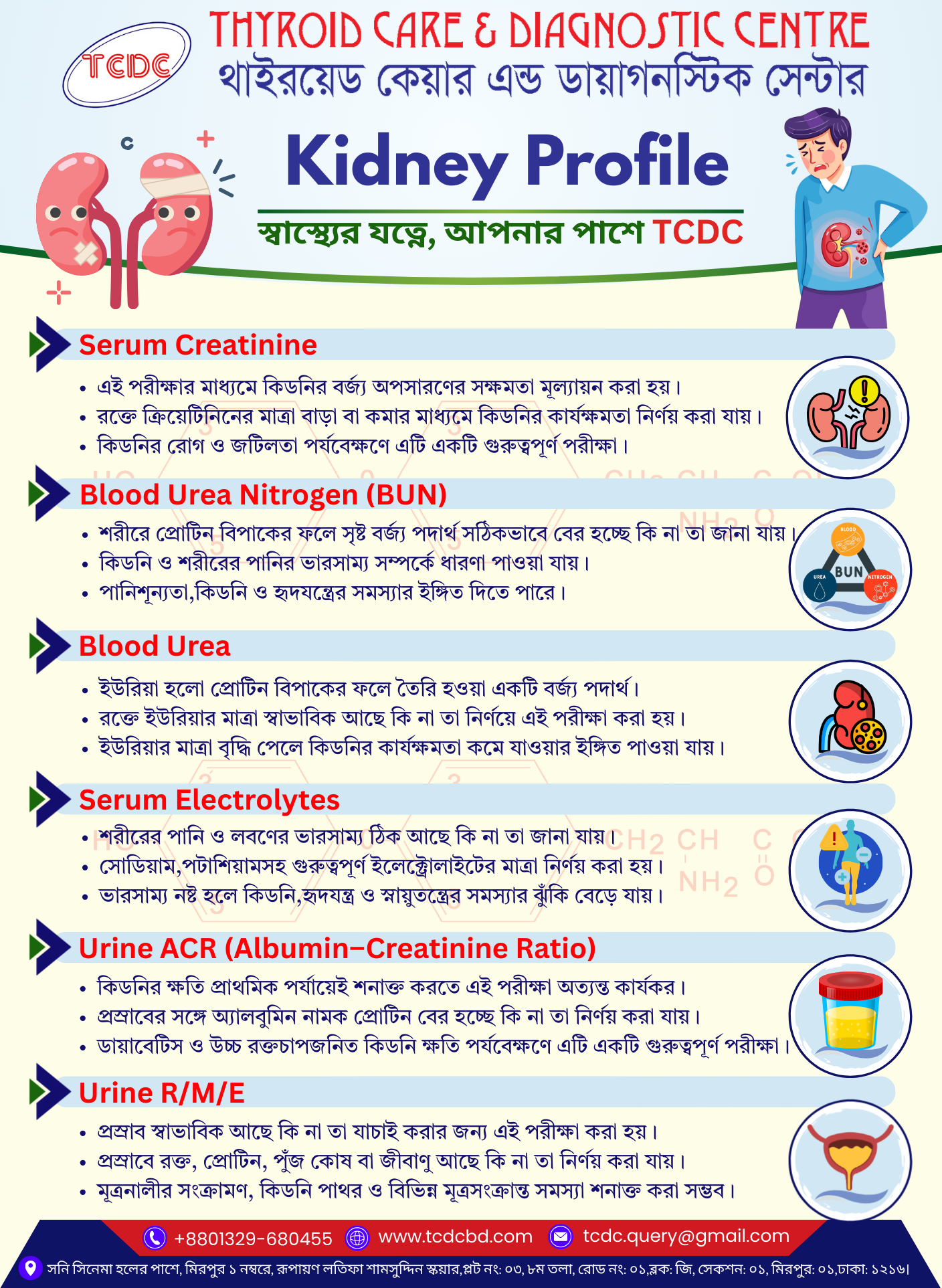
The importance of kidney health and details the specific tests included in a Kidney Profile.
Kidney Profile Tests:
The following tests are used to evaluate kidney function and detect potential complications:
1. Serum Creatinine:
*This test evaluates the kidney's ability to remove waste from the body.
*Kidney efficiency is determined by the rise or fall of creatinine levels in the blood.
*It is a vital test for monitoring kidney disease and related complications.
2. Blood Urea Nitrogen (BUN):
*Determines if waste products created from protein metabolism are being *excreted properly.
*Provides insights into the body's water balance and kidney health.
Can indicate dehydration, kidney issues, or heart problems.
3. Blood Urea:
*Urea is a waste product formed from protein metabolism.
*This test determines if urea levels in the blood are normal.
*Increased urea levels indicate a decrease in kidney functionality.
4. Serum Electrolytes:
*Determines if the balance of water and salt in the body is correct.
*Measures levels of vital electrolytes, including Sodium and Potassium.
*An imbalance increases the risk of kidney, heart, and nervous system problems.
5. Urine ACR (Albumin-Creatinine Ratio):
*Highly effective for detecting kidney damage at an early stage.
*Determines if a protein called Albumin is being excreted in the urine.
*A crucial test for monitoring kidney damage caused by diabetes and high blood pressure.
6. Urine R/M/E (Routine/Microscopic Examination):
*Performed to verify if urine composition is normal.
*Detects the presence of blood, protein, pus cells, or bacteria in the urine.
*Helps identify urinary tract infections (UTI), kidney stones, and various urinary problems.